8 Ways AI Helps Insurance Teams Understand Customer Feedback
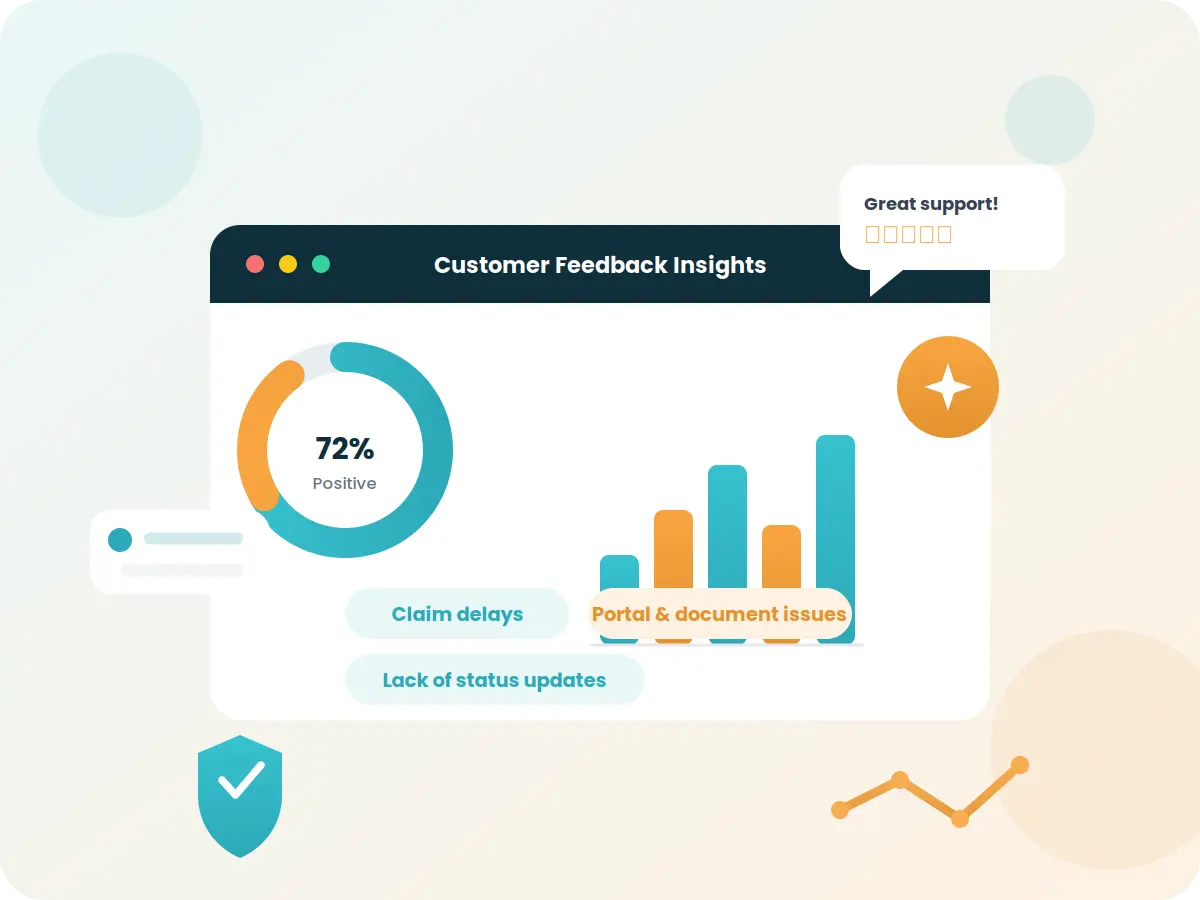
Insurance companies gather feedback at every stage of the customer journey. People share their thoughts after filing a claim, renewing a policy, talking to customer service, or visiting a branch. Over time, all those comments, ratings, and survey submissions pile up, sometimes into the thousands.
AI makes sense of the chaos. It spots patterns, figures out how customers feel, groups similar complaints, and highlights trends worth noticing. Instead of spending hours sifting through individual responses, teams can focus on solving the problems customers mention most.
Insurance companies aren't short on customer feedback. They get it from claims, renewals, customer support, branch visits, emails, and online reviews. The real problem starts after all those responses arrive.
One insurance company might receive thousands of comments every month. Some complain about slow claim processing. Others gripe about confusing documents or poor communication. Even when customers describe the same problem, they rarely use the same words, which leaves these issues scattered across spreadsheets and emails.
Manually sifting through all that feedback takes forever, and important patterns can slip by unnoticed. This is where AI steps in, not to replace people's judgment, but to turn heaps of feedback into insights that customer experience, claims, and operations teams can actually use.
Customers describe the same headaches in different ways. One grumbles that a claim "took forever." Another says they "waited weeks for approval." Someone else is mad about not getting updates. Different words, same problem.
AI looks at thousands of responses and finds the common threads. No more poring over every submission. Teams see which complaints pop up the most, and if they're becoming more frequent. It's much easier to prioritize improvements based on real feedback, not just a handful of comments.
For claims managers, this means less time chasing down scattered complaints and more time actually fixing the things that matter to customers.
Scores don't tell the full story. Two people might both give four stars, but one praises the staff while complaining about long document checks, and the other was happy with the settlement but annoyed by a lack of updates.
AI's sentiment analysis digs into what people write, not just the number they pick. Teams see which parts of the experience spark frustration or delight. That's way more helpful than a score alone.
Platforms like Surveysides blend survey data with AI sentiment analysis, letting teams scan thousands of comments at a glance. If negative feelings start rising, managers can dig in and address problems before they hit more customers.
One huge challenge is inconsistency. Customers rarely complain in the same way. Someone says they "couldn't upload documents," another notes the "customer portal failed," and someone else mentions emailing everything because the website kept crashing.
Without AI, these probably land in separate buckets, even though they're describing the same headache. AI spots those similarities, ties them together under a single theme, and makes the data way easier to interpret.
Now, instead of wading through hundreds of almost-identical complaints, teams can focus on real, widespread issues and decide what fixes should happen first. The more feedback a company receives, the more value this grouping brings.
Looking at just one month's survey results barely scratches the surface. Customer experience changes over time, and small issues can quietly grow if you don't catch them.
With trend analysis, insurance teams compare feedback across weeks or months. Maybe complaints about slow claims grow from a few in January to a lot in March. That pattern tells a much bigger story than any single report.
Spotting these trends early lets companies adjust their processes, address problems, and train their teams before customer satisfaction takes a hit. Tools like Surveysides make this easy, with features for filtering responses and tracking changes over time.
Feedback isn't the same everywhere. One branch might earn praise for friendly staff, while another gets called out for slow claims or long waits. It's hard to spot these differences by just reading through random surveys.
AI sorts feedback by branch, region, product, or customer type. Managers can compare locations at a glance with no manual sorting needed. Instead of just looking at average scores, teams see what's working and what isn't at each branch.
This also uncovers best practices. If one office nails customer satisfaction, others can learn from their success.
Not every complaint is equal. If five people mention a confusing form, it needs review. If five hundred people complain about slow approvals, that's the fire to put out.
AI ranks issues by frequency and shifts in sentiment. Instead of chasing the loudest voice, companies can fix the pain points hitting the most customers.
A monthly summary might reveal claim delays, website issues, and slow support as top problems. That gives teams a concrete place to start, without wading through endless survey pages.
Customers don't usually leave over a single bad experience. It's the build up of slow responses, repeated document requests, and unclear policies all adding up.
With AI tracking feedback over time, these pain points become easier to spot and fix before they drive people away. If complaints about claim communication keep rising, companies can tweak their process before customers start leaving in droves.
It's not about guessing who'll leave, but catching problems early enough to keep people happy.
Executives aren't going to read 10,000 comments. They need quick, clear insights about what's wrong, why, and where it's happening.
AI summarizes the mountains of feedback into key themes, trends, and issues. Instead of slogging through every comment, leaders spot the biggest pain points and see whether changes are actually working.
Survey platforms make life easier here. Rather than downloading tons of spreadsheets, tools like Surveysides combine survey collection, AI analysis, filters, demographic breakdowns, and trend tracking in one spot. This helps teams quickly move from collecting data to making changes that matter.
Picture an insurance company that closes 10,000 claims a month. After each claim, customers get a quick survey about communication, processing, and their overall experience.
Pretty soon, the team is buried in thousands of comments. Reading them all? Not happening. Scanning a small sample could easily miss the real trends.
AI analyzes every response. It groups similar comments, checks the mood, and flags the most common complaints.
Here's the twist: The team discovers that claim delays aren't actually the main problem. Customers are more upset about a lack of updates during the process.
That kind of insight shifts priorities. Instead of just speeding up claims, the company focuses on keeping customers informed, and experiences improve across the board.
Getting customer feedback is easier than ever. Making sense of it is the hard part.
Insurance companies already have a wealth of insights in their surveys and customer interactions. The trick is spotting the patterns before little problems become big ones. AI organizes feedback, spots trends, highlights sentiment, and uncovers issues that humans might miss just by reading through responses.
If your team already gathers feedback, the next step isn't to send more surveys. It's to actually use what you've got. Tools like Surveysides help make this possible by blending survey collection, AI sentiment analysis, filtering, trend reports, and dashboards so teams can turn feedback into real action.
Nope. AI helps organize and summarize feedback, but people still decide what to do next. It cuts down on grunt work, but good business judgment is still key.
Not at all. Even if you get a few hundred surveys a month, AI analysis saves time. As feedback grows, the benefits just get bigger.
AI can handle big piles of feedback pretty well, but it’s not flawless. Human review still matters, especially for tricky or sensitive situations. AI works best as a tool to speed up review, not replace it.
Anything text based. Claim surveys, policy renewals, customer service feedback, branch reviews, employee comments, you name it.