Why Most Market Research Survey Data Fails to Drive Change
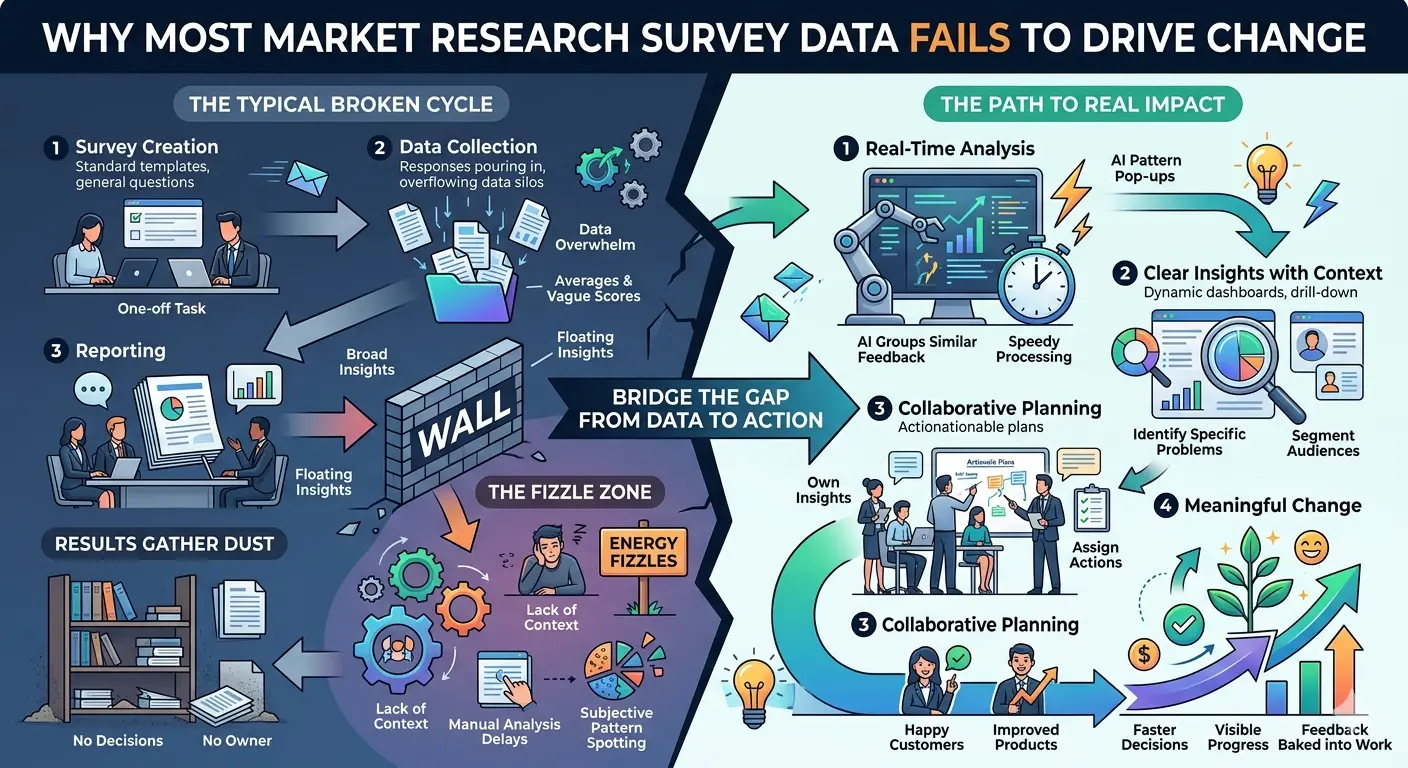
Think about all those surveys your team runs. Most of the time, responses pour in, someone builds a report, people nod at the highlights, and then nothing really happens. The real problem is not just too much data. It is what happens once you have it. There is this weird space between "That's interesting!" and "Let's actually fix something," where all the energy fizzles. The toolkit for taking data and turning it into action is just missing.
Teams often treat surveys as a one off task. You get everyone to fill out the form, summarize what comes back, share a deck, and that is the end of it. The focus lands on reporting, not on any plan to follow up or solve issues. So the insights just float around. No one chases them, and nothing actually changes. It becomes a ritual rather than a tool for improvement.
Here is the heart of it. Most surveys give you a pile of averages. Sure, the satisfaction score is a 6, but what does that mean? A "meh" number tells you people are not thrilled, but it gives no clues about what is wrong or where to dig. You are left staring at broad results with no obvious starting point. When teams do not look for specifics, the findings stay shallow, and everyone is left guessing what comes next. Insight without direction just is not useful.
Data is nothing without context. Maybe the survey shows some people are not happy, but who are they? Why do they feel that way? If you do not break down responses by customer type, region, or situation, you end up mixing everyone together. That blurs real problems and hides little details that could make or break your next step. What looks like one "big" problem might actually be five smaller ones in different places.
Going through hundreds or thousands of survey responses by hand takes forever. It is draining to read every comment, try to make sense of it all, and actually spot useful patterns. Some teams give up early. They settle for top line numbers and ignore the interesting stuff further in. Or they grind endlessly, and by the time they come up with something actionable, the world has already moved on. The process just cannot keep up with the real pace of decision making.
Patterns do not just magically show themselves. Someone actually has to sift through all the responses, group similar ones, and figure out what is really going on. People all see things differently, so two analysts might pull out totally distinct themes from the same survey. When responses are not organized well, useful connections get lost and everyone gets stuck on random comments instead of the actual trends.
Often, survey results just cycle through emails or slip into a shared folder, without anyone owning them or setting a plan. No one is assigned to do anything, so insights stay sidelined. There is a gap between knowing what people say and actually fixing things. There is no person or process to bridge the two. Teams get stuck compiling feedback instead of actually using it.
Big surveys seem like they should help, but honestly, an avalanche of data just muddies everything. With too much crammed into one report, nothing stands out. Teams look at crowded dashboards and struggle to see what needs attention first. The result? No clear action and a lot of confusion about where to even start.
Everything moves faster with real time analysis. Instead of sitting around with a mountain of unread responses, patterns pop up as they come in. That means teams can make decisions right when feedback is relevant, not weeks later when it is old news. You keep the momentum up. Ideas stay fresh, and action happens when it matters most.
Surveysides is all about getting past the usual survey rut. Instead of slogging through manual sorting or staring at endless spreadsheets, you use templates to get surveys out fast. AI jumps in to group similar feedback, highlighting key topics instantly. The dashboards update in real time, making it easy to spot trends without waiting on a big report. Cross tabs let you zero in on exactly which audience is saying what. There is less grunt work and more time to actually plan next steps, so teams spend energy changing things instead of just documenting problems.
When feedback actually gets used, the whole process shifts. Teams instantly know what is working and what is broken, with enough detail to fix the right stuff. Decision making gets faster, because insights are easy to find and act on. Collecting feedback is not just routine anymore. It is baked into daily work. When action follows information, everyone can see the point of the survey, and it finally feels worth the trouble.
Survey data sparks change only when teams push past just reporting. If findings are vague, lack context, or take forever to analyze, nothing moves forward. But if you can see clear patterns, move quickly, and tie insights directly to real actions, data stops gathering dust and starts making an impact. Running surveys is just the starting point. The difference comes when you actually do something about what you learn.
Because they stop at making reports. There is no one responsible for turning insights into real steps, so nothing actually changes.
Teams miss context or skip grouping responses. That hides patterns and keeps the findings fuzzy.
Break up answers by key groups, pull out common themes, and focus on repeat issues. Those are the ones worth fixing.
Definitely. When you move quickly on feedback, issues get fixed before they grow bigger.
Automation wipes out the manual drudge work, keeps your findings organized, and makes it easier to notice patterns.
It takes care of the boring parts, building the survey, grouping answers, and updating the dashboards, so you can focus on using what you find. You get decisions, not just another stack of reports.